Refrigerator Repair
 Dishwasher Repair
 Washer Repair
 Electric Dryer Repair
 Oven Repair
 Stove/Cooktop Repair
 Freezer Repair
 GAS Appliance Repair
 Appliance Installation
Appliance repair in London, Ontario
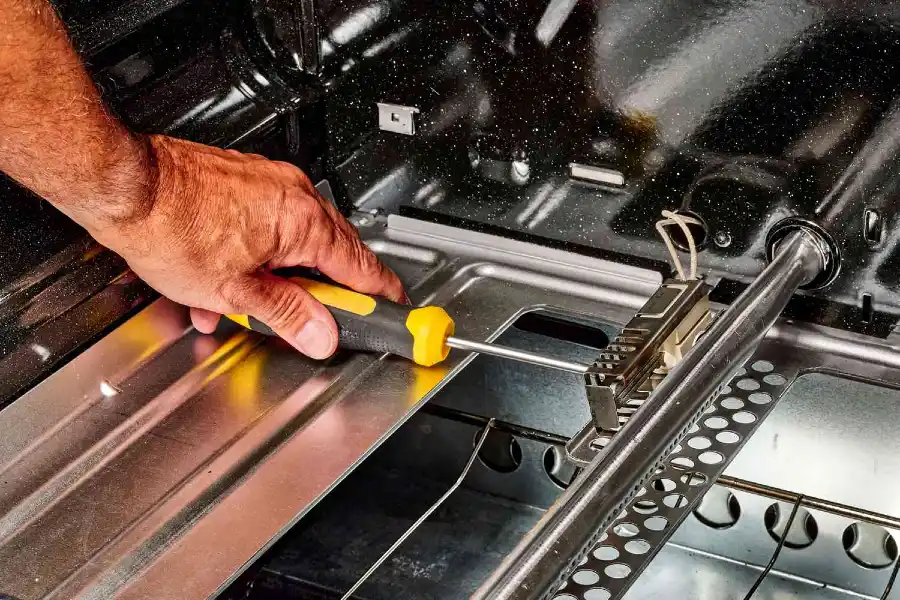
We repair fridges, washers, dryers, dishwashers, ovens, cooktops and freezers across London, Byron, Lambeth, Hyde Park, Masonville and White Oaks, usually the same day. A good share of the work here starts in a basement laundry room, which changes what gets checked first. Labour runs $92 to $278, and the service call is free with the repair.
Your Local London Repair Team
- Same-day appointments in most of London
- Diagnosis at your address, quoted before work starts
- Warranty up to 3 months on parts and labour
- Fully insured technicians
- ODP-certified for sealed refrigeration systems
- Common parts carried on the van
- Tenant and landlord bookings both welcome
- Transparent pricing, no call-out fee with a repair
Article Reviewed & Technically Verified by Dmitriy D., Lead Appliance Repair Technician, ODP-Certified (15+ Years Experience)






OUR APPLIANCE REPAIR SERVICES IN LONDON
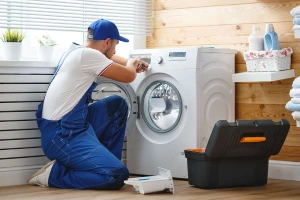
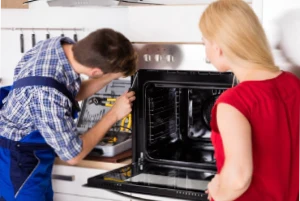
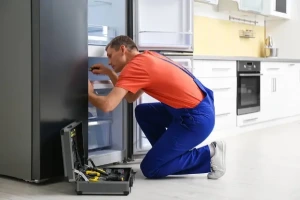
Find Your Appliance Fault
Start with the appliance and what it is doing. Most of what we are called out to in London shows no error code at all, so the code column is the last one rather than the first.
| Appliance | What it is doing | What it usually is | Code, if any |
|---|---|---|---|
| Washer | Water on the basement floor | Worth ruling out the drain first in this city. If it only leaks while filling, close the taps and it stops, which confirms the hoses in seconds | none |
| Washer | Leaking from the front of a front-loader | The door boot seal, split at the bottom where coins and clips collect | none |
| Washer | Will not spin, or drains slowly | Pump filter and the standpipe height before the pump itself | varies by brand |
| Washer | Banging or walking | Load distribution, then the suspension. On an uneven century-home basement floor, levelling matters more than owners expect | none |
| Washer | Musty smell | Residue in the door seal and dispenser. A damp basement laundry room makes it worse | none |
| Washer | Burning smell | Stop and unplug it. Belt, motor or a seized pump, and running it on makes the repair bigger | none |
| Dryer | Tumbles cold | Element, thermal fuse or thermostats. A blown fuse is a symptom, so the vent run gets checked in the same visit | varies by brand |
| Dryer | Takes far longer than it used to | Lint screen and the duct run. A long basement duct with several elbows is common in older London houses and chokes airflow | none |
| Dryer | Getting too hot, or a burning smell | Stop using it. Lint against the heater and a blocked duct are the usual pair, and this one is a fire risk | none |
| Dryer | Rumbling or squealing | Drum rollers, idler and belt, normally replaced together | none |
| Dishwasher | White film on glasses, chalky residue | Scale. At roughly six grains, London water deposits slowly on spray arms and heating elements. There is a section further down with the City's own numbers | none |
| Dishwasher | Water standing in the tub | Filters and sump, then the drain pump and the hose loop under the sink | varies by brand |
| Dishwasher | Water on the kitchen floor at the door | The door gasket, or foam from the wrong detergent. Both look the same on the floor | none |
| Dishwasher | Dishes coming out wet | Rinse aid empty before anything else, then the heating circuit | none |
| Dishwasher | Smells bad | The filter and sump. A ten minute clean solves most of these without a visit | none |
| Fridge | Running but not getting cold | The defrost circuit or the evaporator fan long before the compressor | varies by brand |
| Fridge | Freezer cold, fresh food warming | Frost blocking the evaporator so air stops moving between compartments | none |
| Fridge | Water under the crispers | A blocked defrost drain, which is a clearing job rather than a parts job | none |
| Fridge | Ice maker has stopped | The fill tube frozen or the supply shut off. Check the tap before booking | none |
| Freezer | Chest freezer in the basement running warm | Lid gasket, then the thermostat. A cold basement can also stop an older unit cycling correctly in winter | none |
| Range | Oven temperature wrong, or will not heat | The oven sensor and its connector before the element or the board | F codes on most brands |
| Range | One surface element will not heat | The element or its receptacle. Burnt contacts are common where a pot has boiled over | none |
| Range | Door locked shut after a self-clean | The latch motor and switch. Let it cool fully first, since many release on their own | F9 on many brands |
| Washer | Stops part way through a cycle | Usually a drain or fill it never completed, so the machine waits. Filter, hoses and the pressure system before the board | varies by brand |
| Dishwasher | Stops part way and the light keeps blinking | A fill or drain step that timed out. Check the filter and the drain hose loop first | varies by brand |
| Dryer | Stops part way and will not restart until it cools | The thermal cut-out doing its job. The vent run is the cause, not the fuse | none |
| Range | Oven door will not open after cooking | The latch has stuck. Let it cool fully, since many release on their own | none |
| Any | Dead, no lights at all | The outlet and the breaker before anything inside the machine | none |
Leaking right now? Close the taps behind the machine, switch it off at the breaker and call us rather than running another cycle. In a London basement that matters more than usual, because a fair share of the water we get called to never came out of the machine. There is a section further down on telling the two apart.
Refrigerator Repair London
A fridge that runs constantly but drifts warm is almost never a dead compressor. On the units we open in London the fault is in the defrost circuit or the evaporator fan, and the giveaway is a freezer that still holds while the fresh food side climbs. Frost builds on the evaporator, air stops moving between the compartments, and the food you notice first is whatever sits on the top shelf.
Water pooling under the crispers is the other common call, and it is a blocked defrost drain rather than a parts job. We clear it, check the drain heater on models that have one, and confirm the door seals still pull a sheet of paper tight before we leave.
Most London bookings can be seen the same day. The technician quotes at your address before starting, labour runs $92 to $278, and the service call is free with the repair.
Washing Machine Repair in London
London runs a lot of older top-load machines. When one fills and drains normally but the agitator sits still, the part at fault is usually the plastic motor coupling, which is designed to shred before the transmission does. It is inexpensive and it is a same-day fix. Owners who are quoted a new transmission for that symptom should get a second opinion.
On front loaders the recurring London faults are a split door boot at the six o'clock position, where coins and hairclips collect, and a machine that will not spin because the pump filter is packed. Both are visible in the first ten minutes of a visit.
Before we dismantle anything on a leak call we run the tap test set out further down this page, because in this city the house drain is a real possibility and you should not pay for a repair the machine did not need.
Dishwasher Repair London
Most London dishwasher calls come down to water that will not leave or heat that will not arrive. Standing water in the tub starts at the filter and sump, moves to the drain pump, and ends at the hose loop under the sink, which installers sometimes leave lying flat so the machine siphons back on itself.
Dishes coming out wet or filmed is the next most common, and at London's six grains of hardness that is rinse aid and scale far more often than a failed board. We check the element and the spray arm holes before anyone spends money on electronics.
Water appearing at the front of the door is either the door gasket or foam from the wrong detergent. On the floor they look identical, which is why we would rather see it than diagnose it over the phone.
London Ontario Dryer Repair
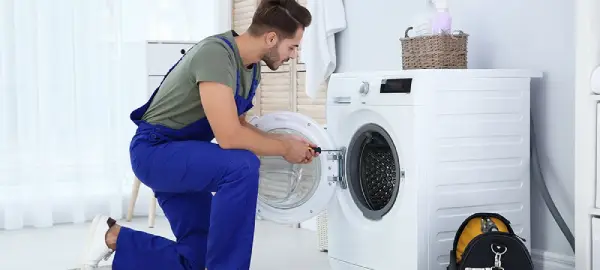
A dryer that tumbles cold has lost the element, a thermostat or the thermal fuse. The fuse is the one worth understanding, because it is a symptom rather than a cause. It opens when the machine overheats, and in a London basement the reason is nearly always the vent run. We replace the fuse and clear the duct in the same visit, otherwise you will be calling again before the season is out.
Rumbling and squealing is the drum rollers, the idler and the belt, and those get replaced together because taking the cabinet apart twice costs more than the parts. A burning smell means stop using it now: lint sitting against a heater is how dryer fires start.
We service electric dryers across London. Gas appliances are outside what we take on at present.
London Stoves and Cooktops Repair
One surface element refusing to heat is the element itself or the receptacle it plugs into, and burnt contacts in that receptacle are ordinary in a kitchen where a pot has boiled over more than once. Replacing the element alone into a damaged receptacle destroys the new element, so both get inspected.
On glass and induction tops the failures are different: a cracked surface, a failed touch control, or a cooling fan that has stopped and put the board into protection. We identify which before ordering, since a glass top and a control board are very different numbers.
Freezer Repair London
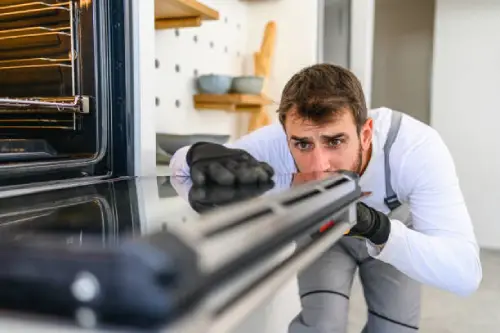
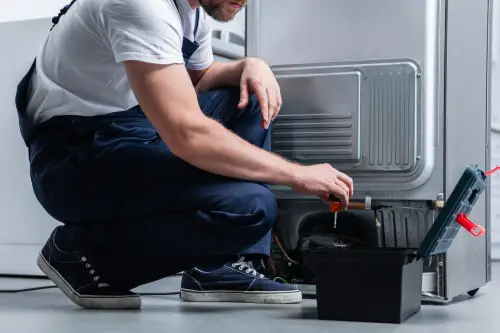
The London freezer call has a shape to it: a chest freezer in an unheated or barely heated basement, full of food, running warm. Start with the lid gasket, because a gasket that has taken a set stops sealing and the unit ices up along one edge. After that it is the thermostat.
Cold basements cause a separate problem worth knowing about. Some older freezers use a thermostat that senses cabinet temperature only. If the room around it drops far enough in a London January, the unit stops cycling and the contents thaw slowly while the freezer looks like it is behaving. If your basement is cold and your food is soft, that may be why.
London Oven Repair
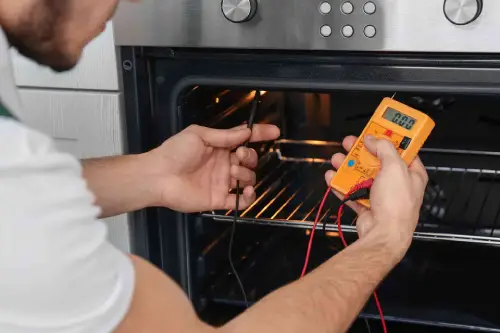
An oven that runs hot, runs cold, or refuses to heat starts at the oven sensor and its connector, not at the board. The sensor is a resistance device, it is cheap, and it drifts with age. We measure it cold against the manufacturer's figure before anyone talks about electronics.
A door locked shut after a self-clean cycle is the latch motor and its switch. Let the oven cool completely first, because a good number release on their own once the temperature drops, and that is a call you can cancel. Many brands report this one in the F9 range.
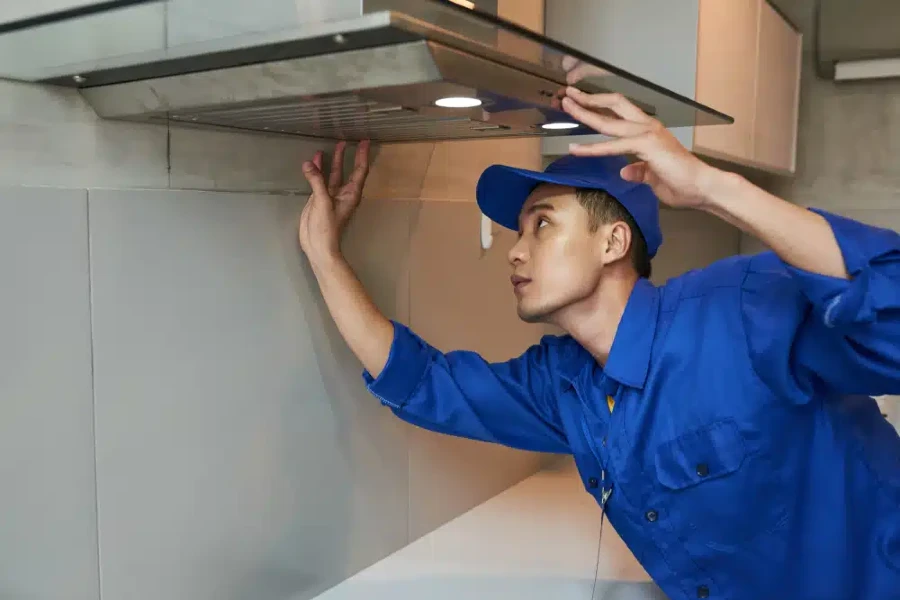
Range Hood Fix in London
A hood that has stopped pulling is a motor, a capacitor, or grease. Grease is the one owners underestimate: baffle filters that have not been through a dishwasher in two years restrict airflow enough that a healthy motor moves almost nothing.
In a renovated London kitchen we also find recirculating hoods that were never ducted outside, running with charcoal filters nobody has changed. Those are working exactly as installed, and the fix is a filter rather than a repair.
London Microwave Repair
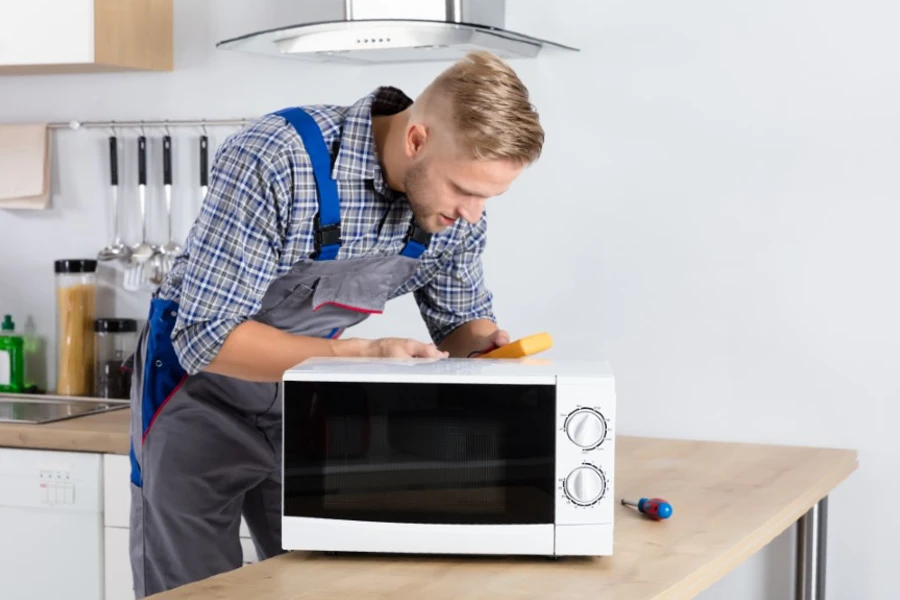
We repair built-in and over-the-range microwaves, where the cost of the unit and the cabinetry around it makes a repair worth doing. A turntable that stopped, a door switch that has failed, or a control panel that has died are all serviceable.
Countertop microwaves are usually not worth a technician visit, and we will say so on the phone rather than after we arrive. The high voltage side of any microwave holds a charge after unplugging and is not owner-serviceable.
Why So Many London Appliance Calls Start in the Basement
London has a drainage situation most Ontario cities do not. The City's own engineering work estimates that approximately 50,000 properties still have weeping tile connected to the sanitary system, the practice used in houses built between roughly 1920 and 1985, before the code required that drainage to go to a sump pit instead. When heavy rain arrives, ground water goes into the same pipe the house drains into, and the sewer can surcharge. London runs a Basement Flooding Grant Program covering 90% of the cost of a backwater valve, a sump pit and pump, or a sewage ejector, up to set maximums, because the problem is that widespread.
This shows up in our work for a simple reason. The basement is where the washer, the dryer, the water heater and the chest freezer live. When a London owner tells us there is water on the floor, the first job is deciding whether the appliance put it there or whether the appliance is standing in someone else's water.
How we tell a washer leak from a drain problem
- Water only during fill. Close both taps behind the machine. If it stops, the fill hoses, the inlet valve or the connection is the source, and that is an appliance repair.
- Water only during drain, or backing up out of the floor drain and the standpipe together. That is the house drain. A washer pumps out fast, and a partly blocked or surcharged line cannot take the volume.
- Water under the machine with the taps off and no cycle running. Usually the tub seal, the pump housing or a split boot on a front loader.
- Water at the wall behind the machine after a storm. A drain contractor is the right call, and we will tell you that rather than sell you a part.
We run the first test with you before anything is dismantled. If the machine is fine and the drain is the problem, you have not paid us for a repair you did not need. Labour on the repairs we do take runs $92 to $278, and the service call is free with the repair.
The dryer half of the same basement
A basement laundry room also means a long vent run. The dryer sits below grade and the exhaust has to climb to an exterior wall, often with two or three elbows on the way. Every elbow costs airflow. In a London house with the laundry moved into a corner of an unfinished basement, we regularly find twenty feet of duct doing the work of eight. The symptom the owner reports is clothes taking two cycles to dry. The part that eventually fails is the thermal fuse, which blows because the heat has nowhere to go. Replacing the fuse without clearing the duct buys a few weeks.
London Water and What It Does to Your Appliances
London does not sit on well water. The city is supplied from two Great Lakes through the Lake Huron and Elgin Area primary water supply systems, and the City's own 2024 water quality reporting puts hardness at 96 mg/L at the Arva reservoir and 115 mg/L at the Southeast reservoir, roughly 5.6 to 6.7 grains per gallon.
That is moderately hard. It is far gentler than the groundwater in Guelph or Waterloo, where 20 to 35 grains is normal, and London owners who moved from those cities often notice the difference in their kettle within a month. Six grains still deposits, though. Over eight or ten years it builds on a dishwasher heating element, inside a washer heater on the brands that have one, and around an ice maker fill valve.
- A softener is optional here, not obligatory. At six grains plenty of London households run without one and their appliances last a normal life. We will not tell you that you need one.
- Rinse aid does most of the work. The chalky film on glasses that owners read as a broken dishwasher is usually an empty rinse aid reservoir plus scale in the spray arm holes.
- Scale kills elements slowly. A dishwasher that stopped drying and a kettle that furs up are the same story at different speeds. We measure element resistance before condemning a control board.
- If you are on a softener, watch the salt dose. Over-softened water foams, and foam inside a washer or dishwasher reads on the control board as a fault that is not there.
Hardness is one figure the City publishes and we can quote. We do not publish neighbourhood-by-neighbourhood water numbers, because the City does not break its supply down that way, and anyone telling you your part of London is harder than another part is guessing.
What We Find by London Neighbourhood
The age of a house predicts the appliance problem better than the brand does. London's neighbourhoods were built in clear waves, and the wiring, the venting and the laundry location came with each wave. The build eras below come from the City's own neighbourhood profiles.
| Area | Mostly built | What that means when we arrive |
|---|---|---|
| Old East Village, Woodfield, Blackfriars | 1860s to 1930s | Laundry retrofitted into a stone or block basement. Uneven floors, so levelling is half the job on a shaking washer. Long vent runs. Narrow stair turns that decide whether a machine comes out or gets worked on in place |
| Wortley Village and Old South | Late 1800s to 1920s | Same century-home basements, plus rear laneways that are the practical way in. Tell us if the lane is the better approach and we will use it |
| Kipps Lane area | 1950s onward | Early postwar stock and a large share of apartments, so building access and elevator booking matter more than the repair itself |
| Oakridge south of Oxford, Westmount east side | 1950s and 1960s | Original kitchens are long gone, so we meet second and third generation appliances in cabinetry cut for something else. Built-in wall ovens of odd widths are common here |
| Oakridge north, White Oaks | 1970s and 1980s | Main-floor or basement laundry, standard openings, straightforward access. The appliances themselves are usually the only variable |
| Masonville | 1980s | Also one of Western's recognised off-campus areas, so a mix of owner-occupied houses and student rentals on the same street |
| Hyde Park | Since 1993 | Second-floor laundry above finished space. A leak here damages a ceiling, which is why we treat a weeping washer as urgent rather than routine |
| Sunningdale | Since 2000 | Newer premium and panel-ready appliances, integrated fridges and column units. Model and serial numbers matter here more than anywhere, so photograph the rating plate before you call |
| Byron and Lambeth | Mixed | Both are inside the city, annexed in 1961 and 1993, and are covered on the same terms as anywhere else in London. They are not out-of-town calls |
Anything above is a description of the housing, not a claim about your machine. We do not know what has failed until we look at it.
Rentals, Student Houses and Second Suites
A large share of London's appliances belong to somebody other than the person standing next to them. Western enrols close to 38,000 full-time students and Fanshawe around 21,000 at its main campus, and Western itself points off-campus students at Old North, Near South, Near West and Masonville. Those houses run landlord-supplied laundry and kitchens under heavy shared use.
Two City rules shape the rest. Residential Rental Unit Licensing applies to non-owner-occupied buildings of four units or fewer, which is exactly the converted century home with a landlord's washer in the basement; purpose-built apartment buildings are exempt. London also now permits up to four dwelling units on a residential property where the zoning allows it, with some of those rules currently held under an interim control by-law while an appeal is settled. The practical effect for us is a second kitchen and a second laundry pair in a lot of basements that were never designed for either.
- Tenants: book with us directly if your landlord asks you to arrange it. We will tell you plainly whether the fault is the appliance or the installation, which is often the question that actually matters in a rental.
- Landlords and property managers: give us the tenant's contact and preferred window and we deal with them from there. Multiple units at one address in one visit is normal for us.
- Basement suites: a stacked or compact machine squeezed into a former storage room is frequently a venting or drainage problem wearing an appliance costume. We check the installation before we sell you a part.
Getting to You Around London
Practical things that make a London visit go faster:
- In Old South and Wortley Village, laneways behind the houses are a protected part of the district's character and are often the sensible approach for anything that has to be carried. Say so when you book.
- In the heritage conservation districts, Old East Village, Woodfield, Blackfriars and Bishop Hellmuth among them, the stairs and the doorway are usually what limits us, and the heritage rules rarely come into it. Measure the narrowest turn if a machine may need to leave the house.
- In the downtown towers, including newer buildings like Centro on Fullarton, we need loading dock hours and whether a service elevator has to be booked. That single detail decides same-day or not.
- In winter, London averages about 194 cm of snow a year and sits downwind of Lake Huron. On a squall day we call ahead rather than let you sit waiting, and we will give you a revised window rather than a silence.
How a London Repair Actually Runs
- You call or book online. Have the brand, the model number from the rating plate, and what the machine is doing. A photo of the plate saves a visit's worth of guessing.
- We give you a window, same day for most London bookings depending on the hour you reach us.
- The technician diagnoses at your address and quotes before starting. You decide with the number in front of you.
- If you go ahead, the service call is free. Labour runs $92 to $278 and the service call is free with the repair. If you choose not to proceed, you pay the diagnostic and nothing else.
- Parts and labour carry up to a 3 month warranty. Common parts travel on the van, so a good share of London repairs finish in one visit.
Frequently Asked Questions
Do you charge for the service call?
Not when you go ahead with the repair. The diagnostic fee is waived and you pay only for the repair itself. If you decide against the repair after we have diagnosed it, the diagnostic stands on its own.
Can you come the same day in London?
Most days, yes, for bookings that reach us early enough. Same-day depends on where you are in the city and what the day already holds, and we tell you honestly when we book rather than after.
My basement flooded and now the washer will not run. Is that a repair?
Sometimes. A machine that took water into the motor or the control board may be repairable, and it may not be. We will tell you which, and if the machine is a write-off we will say so instead of selling you a part that will not save it. Do not switch it on before we look at it.
Do I need a water softener in London?
Not necessarily. London's supply runs roughly 5.6 to 6.7 grains per gallon, moderately hard, and much softer than the groundwater cities east of here. Plenty of London households run without a softener without appliance trouble.
Do you work on gas appliances?
Not at present. We service electric ranges, dryers and cooktops across London.
Do you cover Byron, Lambeth and Hyde Park?
Yes. All three are within the City of London and are covered on the same terms as the rest of the city.
Will you work on a rental where I am the tenant?
Yes. We handle tenant-arranged calls regularly and we are equally comfortable being booked by a landlord or a property manager with the tenant as the site contact.
What if the part is not on the van?
We order it and return. You are quoted the whole job up front, so the second visit does not become a second bill.
Appliance Repair Near Me in London
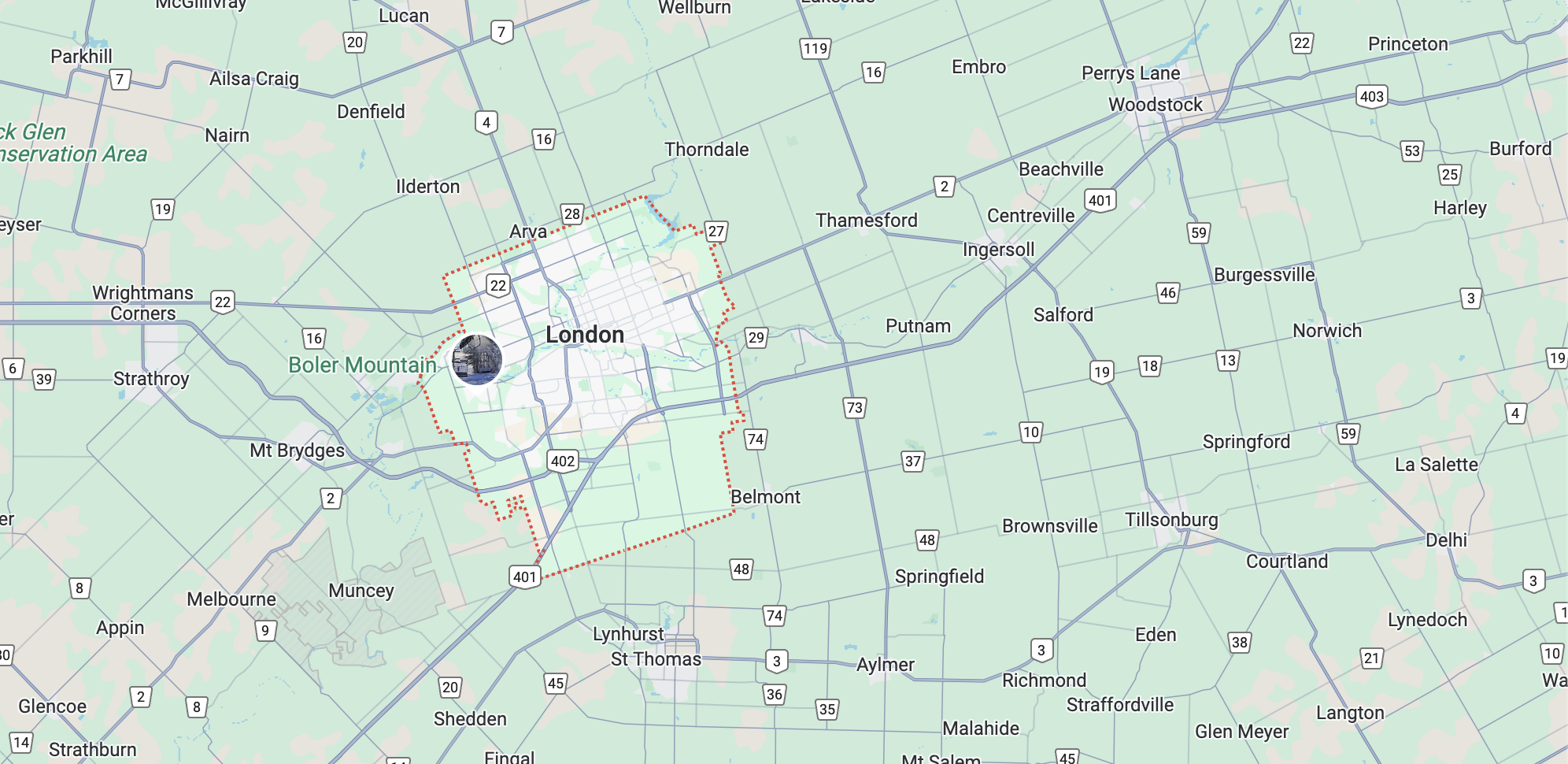
We cover the City of London, from Old East Village and downtown out to Hyde Park, Sunningdale, Byron, Lambeth, White Oaks and Masonville. Beyond the city limits we serve St. Thomas, about 25 minutes south, Strathroy, 40 km west, Dorchester and Thorndale in Thames Centre directly to the east, Ilderton, Komoka and Arva in Middlesex Centre, Belmont in Central Elgin, and Mount Brydges. Call (226) 455-5596 and we will tell you straight away whether your address is inside our London run.
Your Local London Appliance Technicians
The London work is done by our own technicians, not a call centre passing your address to whoever answers. Every repair is quoted at your door before anything is opened, parts and labour carry up to a 3 month warranty, and the team is fully insured. Our lead technician Dmitriy D. holds ODP certification for sealed refrigeration systems, which Ontario requires for any work on a sealed system and which a great many general handymen do not have.
We would rather tell you a repair is not worth doing than take the money. That is the whole of the business model, and it is why most of our London work arrives by word of mouth.
Appliance Brands We Fix
We take great satisfaction in serving a broad spectrum of well-known appliance manufacturers, including:






























































Locations We Service
We are here to help with your appliance repair requirements anywhere in the London area.
- Airport
- Argyle
- Berkshire Village
- Bishop Hellmuth
- Bostwick
- Bradley
- Brockley
- Broughdale
- Byron
- Calamity Corners
- Carling
- Central London
- Cleardale
- Crumlin
- Delaware
- East London
- Fanshawe
- Glanworth
- Glen Cairn
- Glen Cairn Woods
- Hamilton Road
- Highbury
- Huron Heights
- Jackson
- Kensal Park
- Lambeth
- Longwoods
- Manor Park
- Masonville
- Nelson Park
- North London
- Oakridge
- Oakridge Park
- Old East Village
- Old Victoria
- Pond Mills
- Pottersburg
- Sharon Creek
- South London
- Southcrest
- Southdale
- Talbot
- Tempo
- The Gore
- Trafalgar
- Uplands
- West London
- Westminster
- Westmount
- White Oaks
- Woodhull
- Wortley